
Why the Operating Model Needed to Come Before More Technology
Many growing manufacturers start with technology as the answer to productivity and future growth.
The logic is understandable. A new system is introduced to solve a particular problem. Then another is added to improve a different part of the business. A spreadsheet becomes a tracker. A tracker becomes a workflow. Another platform is brought in to help with projects, stock, quoting or reporting. Each decision can make sense at the time. The challenge is what happens next.
When Technology Starts to Create More Complexity
As the business grows, it can end up with multiple systems that don't quite join together, information held in different places, manual re-keying, spreadsheets filling the gaps and experienced people acting as the connection between processes.
Instead of technology making the business simpler, the business starts to accumulate more workarounds and more complexity.
That was the context for a four-day intervention commissioned by Made Smarter for a bespoke washroom manufacturer.
The business had already engaged a technology consultant to review its systems and recommend a future direction. That work had correctly identified fragmented systems and duplicated information, yet the proposed response was largely to connect and extend the existing technology landscape.
Our approach was different. We didn't start by asking which systems should be integrated, retained or replaced. We started by asking how the business actually worked.
Understanding the Operation End to End
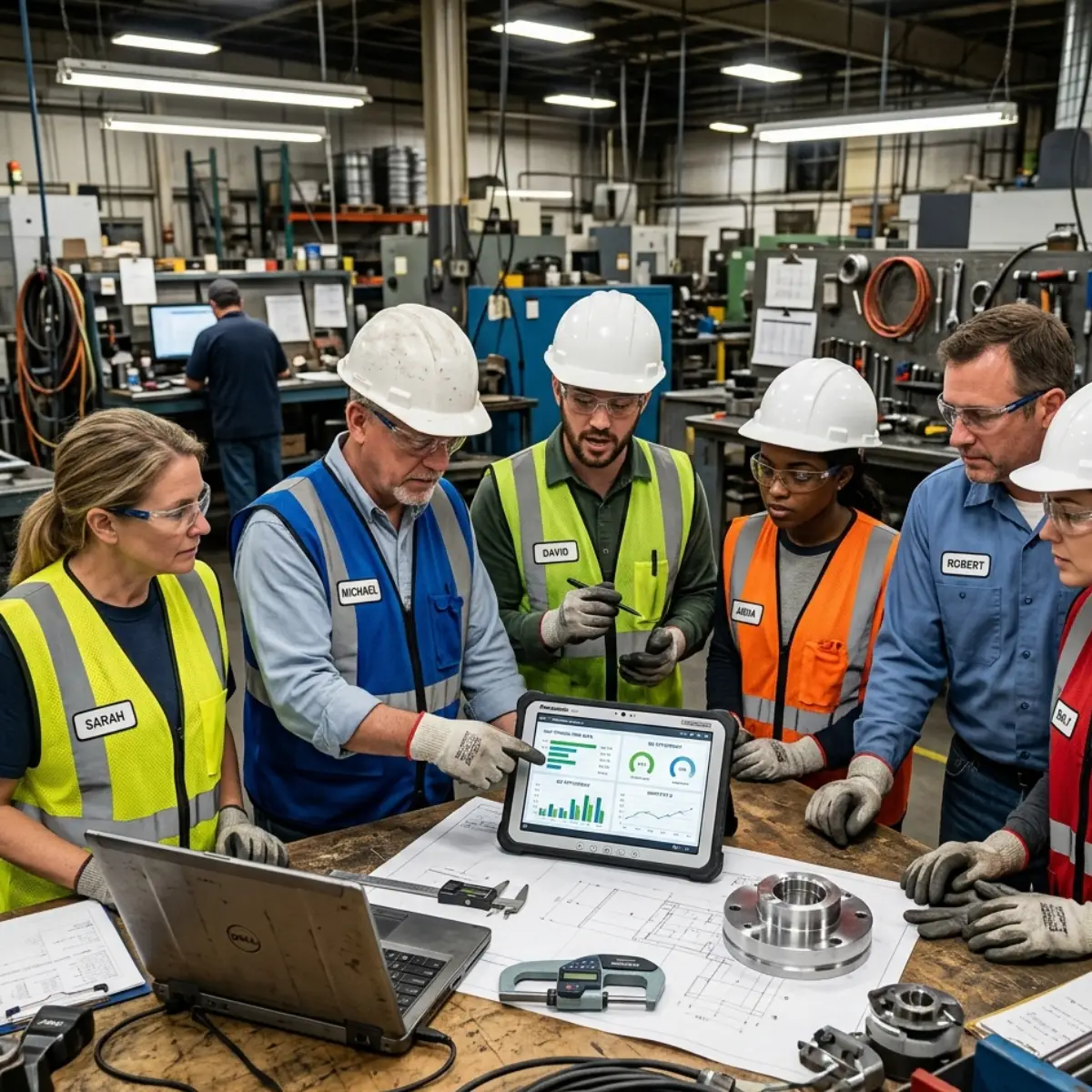
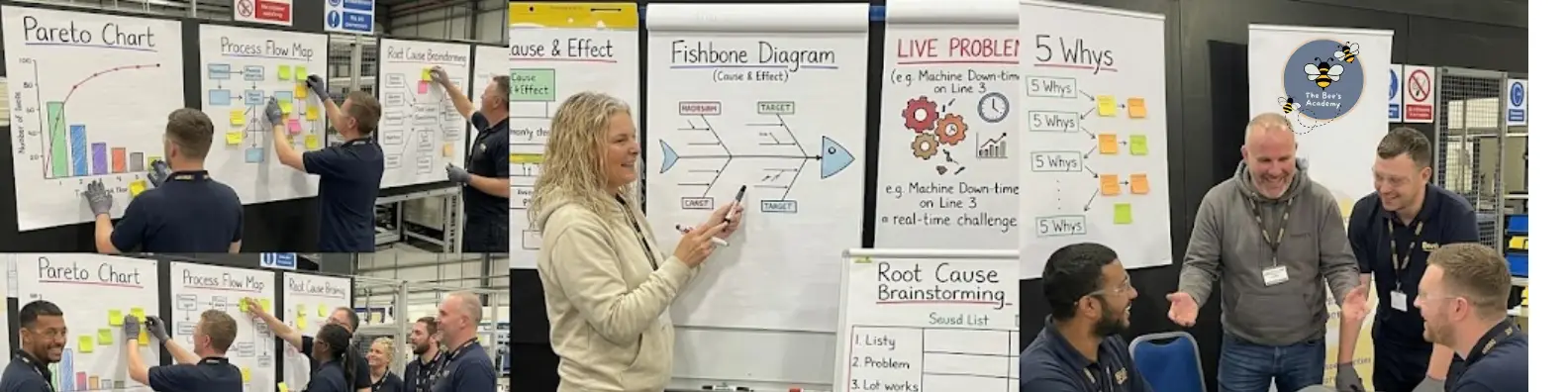
Over four days, we looked beyond the technology and spent time understanding the operation end to end.
We reviewed how work moved from sales into projects, purchasing, stores, manufacturing and dispatch; how people did their jobs; where they were frustrated; where information had to be checked or recreated; where handovers relied on individual knowledge; and where people had developed workarounds simply to keep work moving.
Crucially, we went to site.
The previous review had been carried out remotely and had focused largely on applications, integrations and data flow. It therefore hadn't examined the physical operation, infrastructure constraints, operational workarounds and the way information was actually used at the point of work in enough depth.
Being on site changed the picture. It allowed us to observe the work as well as discuss it. We could see where delays occurred, where information moved between teams, where people had to interpret what they had received and where experienced employees were compensating for gaps in systems or process.
The Central Issue Wasn't Integration
We also spent time understanding the manufacturer's ambitions for growth and what good needed to look like in the future.
That mattered because the question wasn't simply how to make today's technology work better. The business was growing. It needed an operating model that could handle more customers, more projects, more handovers and more operational decisions without increasing manual coordination at the same rate.
What became clear was that the central issue wasn't really integration.
Sales, projects and manufacturing each had established ways of working, yet the joins between them were less defined. Work still depended heavily on people knowing what needed to happen next, checking information and stepping in when something didn't go to plan.
The same pattern showed up repeatedly.
- A handover from one team to another could require information to be checked or rebuilt
- Capacity wasn't always visible when customer commitments were made
- Material and stock information could depend on local tools and individual knowledge
- Changes or fast-track requests could create additional drawings, material, rework, production disruption, transport cost and people time elsewhere in the business
None of this was because people weren't capable. In fact, the opposite was true. The business was working because experienced and committed people were bridging the gaps between systems and processes. The risk was that this model became harder to sustain as volume increased.
The Operating Model Needed to Come First
That led to the key conclusion from the intervention: the operating model needed to come before the technology.
Before investing further in integrations or adding more platforms, the business first needed to define more clearly:
Only then could the technology be assessed properly.
That changed the direction of the recommendations.
Rather than automating the existing complexity, the proposed sequence was to simplify and define the operating foundations first, then prove the technology against real work.
Simplify First, Then Prove the Technology
The recommended sequence meant creating clearer end-to-end flow, ownership and handover rules; improving visibility of capacity, job cost and operational performance; addressing infrastructure issues that were consuming productive time; and reducing dependency on critical knowledge held by individuals.
From there, the business could test the systems it genuinely needed, including stronger customer and quoting capability, clearer project and workflow control and dedicated manufacturing/MRP capability.
- Clearer end-to-end flow so work could move through the business with less manual interpretation
- Defined ownership and handover rules so critical decisions didn't sit in informal knowledge
- Better visibility of capacity and job cost so customer commitments could be made with stronger operational awareness
- Infrastructure issues surfaced where they were consuming productive time or forcing workarounds
- Technology requirements reframed around work that needed to become easier, faster and more visible
Technology should remove work, reduce error or improve a decision. It shouldn't simply make an unclear process digital.
The four-day intervention shifted the conversation away from “which technology should we buy?” and towards a more useful question.
How does the business need to operate in order to grow well, and what technology will make that way of working easier, faster and more visible?
For Made Smarter, that meant the manufacturer had a much stronger foundation for future digital investment.
Instead of adding another layer to an already fragmented technology landscape, it could now make technology decisions against a clearer picture of the operation it was trying to build, one designed to support higher volumes, better visibility, stronger control and profitable growth.
Technology can strengthen a well-designed operation, yet it can’t design the operation for you.
If the work is unclear, more systems can make confusion faster. If the operating model is clear, technology has something useful to support.
The right starting point wasn’t another integration decision. It was understanding how the business needed to work as it grew.