

Lean Six Sigma
Training
BUILD IT. THEN OWN IT.
Your own people, trained and qualified, solving problems from the inside. No dependency, no repeat call-outs. Yours to keep.
Two disciplines. One programme. Here's what they each do and why they work together.
Together - an operation that runs as it should, with less waste, less variation and the skilled people to continue to keep it that way.

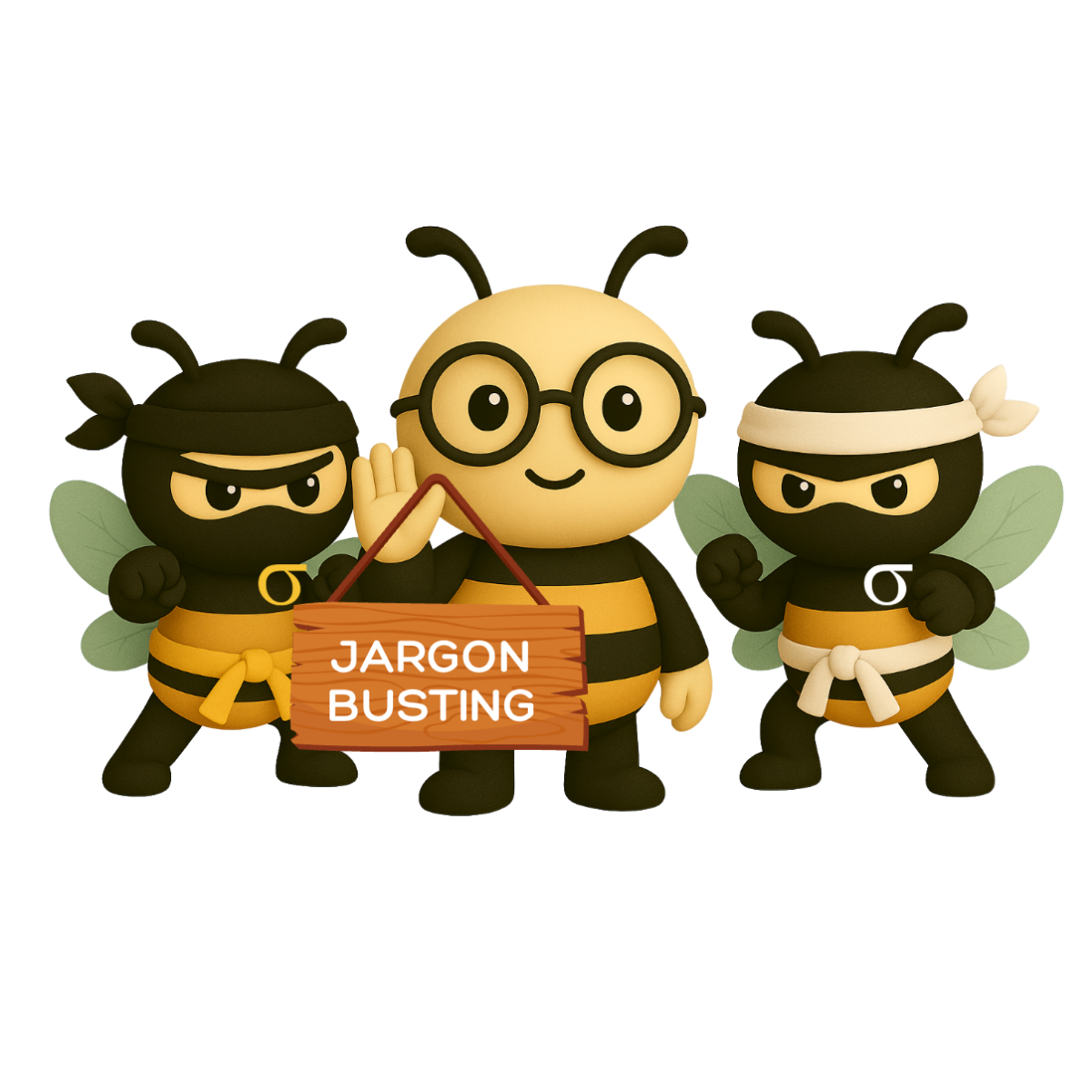
"Yes, those are ninja bees."
The White, Yellow and Green belt hierarchy mirrors the internationally recognised Lean Six Sigma certification structure. The visual is deliberate. This methodology has been taught the same way for 30 years. We made a conscious decision to do it in a way that helps you use them immeediately after the training ends.
THE TRAINING
Most Lean Six Sigma training has been delivered the same way for 30 years. Dense slides, heavy terminology and a workbook that gets filed and forgotten.
It produces people who passed the test but freeze when a real operational problem lands in front of them, because nothing about the classroom felt like the shop floor, the back office, the practice or the warehouse.
The Bee's Academy is different by design. We don't deliver content at people. We coach them through it. Interactively, using examples drawn directly from their sector, their role and their real operational challenges. Terminology is the vehicle, not the destination. Understanding and application are the only things that matter.
James holds a Lean Six Sigma Master Black Belt. The highest qualification in the discipline. He has spent his career applying it in real operations, not just teaching it. Every session is built around application first, theory second, and is delivered in language that works for warehouse supervisors, fee-earners and care managers equally.
Amy brings certified Green Belt expertise alongside deep experience in culture change, communication and organisational behaviour. The human side that determines whether improvement actually sticks once the training room empties.
Together - the method and the people capability to make it hold.
The training ends. The real work starts.
Yellow Belts are typically closest to the operational problems. Team leaders and supervisors applying improvement tools in the real world for the first time, often without a peer group or senior support around them. A retainer keeps them confident, challenged and progressing rather than reverting to old habits when operational pressure returns.
Green Belts lead improvement programmes across teams and functions. The retainer also forms the route to internationally recognised Lean Six Sigma accreditation, achieved through structured assessment and real project application rather than a single exam. For organisations that want a qualification that holds up anywhere in the world, this is how it's earned.
Both retainers are POA, structured around the level of support required and the duration of the engagement.
EVERY SECTOR. EVERY CONTEXT.
Manufacturing is the obvious home.
But Lean Six Sigma is about how work flows.
Not what the work is. Select your sector to see how it applies.
WHO IT'S FOR
Not every organisation needs
the same level of capability.
Some teams need awareness. Some need frontline leaders who can solve operational problems themselves. Others need people capable of leading structured improvement programmes across teams or functions. The Bee's Academy builds that capability progressively - from awareness to ownership.
THE PROGRESSION
Three levels. One compounding capability.
THE OUTCOME
What actually changes when it's done properly.
CONTROL
Capability that stays…and compounds
Certified people inside your organisation solving problems without needing external intervention.
Grows as more people are trained and apply the method to real operational challenges over time.
Improvement programmes led from inside the organisation, not managed from outside it.
White builds awareness. Yellow builds problem-solving. Green builds improvement programme leadership.
All three levels combine to create a capability your business owns in full, with no ongoing dependency on external support to keep it running.
HOW THIS CONNECTS TO THE REST
This sits at the top of the capability stack.
We can come in and fix things,
but the most valuable thing we can do is make sure you never need us to do it again.