
Building an Engineering Business for Growth: Getting the Operating Model, Systems and Site Working as One
A growing engineering business needed to move into new premises, reduce dependency on its owner and create the structure, systems and capabilities required for sustainable growth.
Our approach was to design the future operating model first, develop technology around how the business needs to work and create a productive site layout that supports the same operational requirements. The objective was a more controlled, commercially focused business with clearer ownership, better workflow, improved visibility and the capacity to grow without everything relying on a few individuals.
A Growing Engineering Business at a Critical Point
There are very few opportunities in business improvement where you get to help build an operating model almost from scratch.
Usually, there is an established structure to work with. Processes may not be documented, responsibilities may be unclear and workarounds may have become normal, yet there is something already in place that needs untangling.
For this engineering business, the opportunity was different.
The company was growing, preparing to move into new premises and looking to create more capacity for the future.
Its owner had built the business through technical expertise, strong customer relationships and a hands-on approach to solving engineering problems.
As the company grew, too much routine coordination, decision-making and commercial activity continued to come back to the same person.
The business was also exploring how technology could provide better control over enquiries, quotations, jobs, stock, labour and customer communication.
At the same time, the new site needed to accommodate existing machinery, work in progress, storage requirements and future revenue-generating activities.
These could easily have become three separate projects:
- Design the new premises
- Introduce new technology
- Restructure roles and responsibilities
Treating them independently risked creating a larger site with the same operational frustrations, technology built around unclear processes and new roles without the authority or capability to operate effectively. The challenge was not simply to move the business. It was to design how the business needed to work next.
Starting with the Business, Not the Solution
One of the most common mistakes we see is businesses introducing solutions in the wrong order.
- A system is purchased before anyone has agreed how work should flow
- A new role is introduced because someone is struggling, rather than understanding why the work is becoming unmanageable
- Responsibilities are shaped around an existing individual rather than the capability the business actually needs
- Processes develop around the limitations of technology instead of technology supporting better processes
We wanted to avoid that.
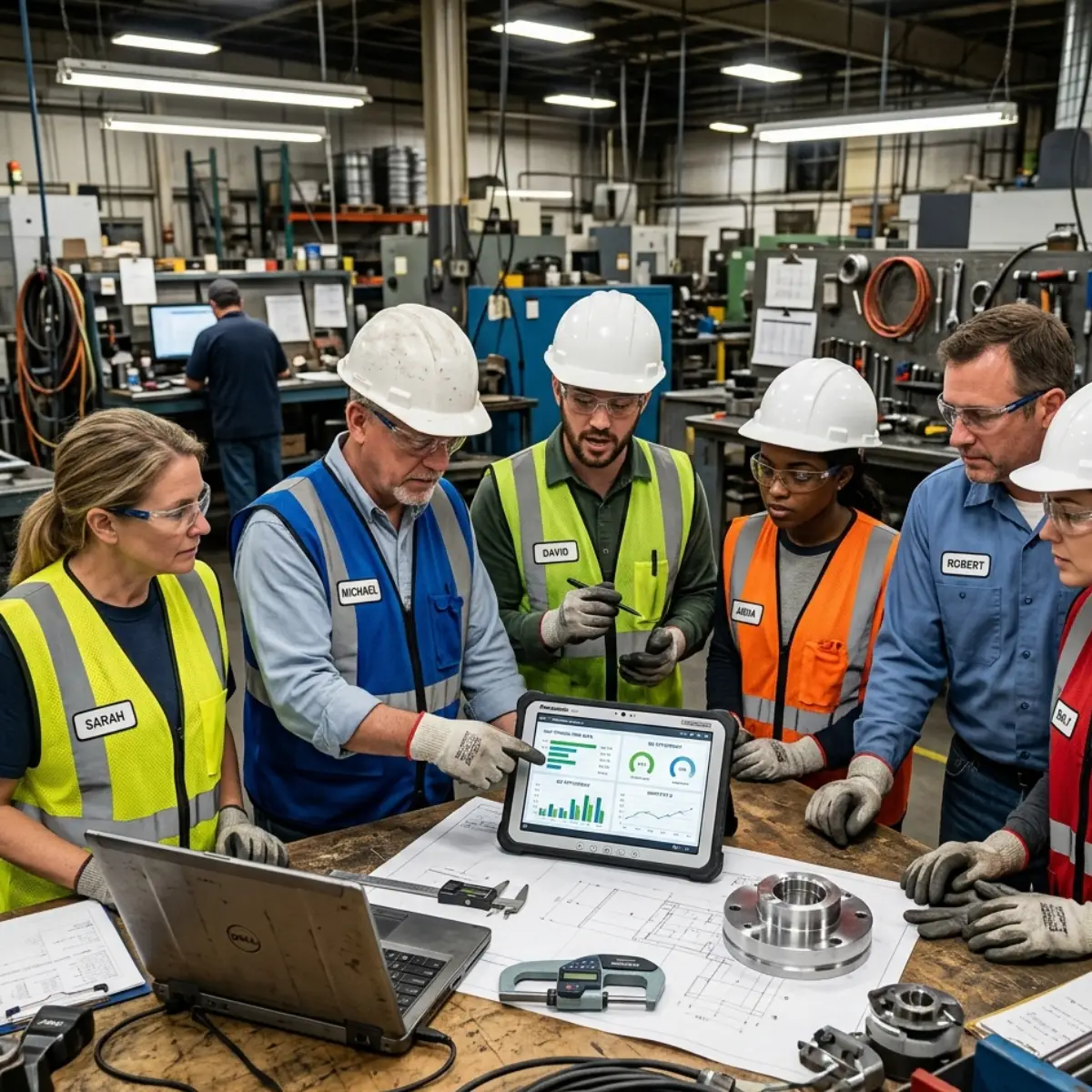
As a hands-on consultancy, our starting point was to listen and observe.
We spent time with the owner and everyone working in the business to understand what was happening day to day. We explored where work was getting stuck, what was frustrating the team, which decisions kept coming back to the owner, where information was being missed, what was preventing the business from taking on more work and what the team believed would make their jobs easier.
We also spent time observing the operation, bringing a fresh pair of eyes to the routines, workarounds and inefficiencies that can become invisible when people are busy keeping the business running.
The aim was not to design an operating model based on how we thought an engineering business should run. It was to understand what this business needed to become.
Before Designing the Model, We Defined What It Needed to Achieve
Business Efficiency Experts is not a traditional strategy consultancy, and we did not want to create a lengthy three-to-five-year document that risked becoming obsolete or sitting in a drawer.
Without a clear direction, it would have been difficult to decide which roles, systems, capabilities and facilities the business would need.
We therefore worked with the owner to develop a focused, practical strategic direction. Rather than producing an extensive strategy document, we captured the essentials in a small number of slides:
- What the business wanted to be known for
- Its technical and commercial strengths
- The types of customers and work it wanted to attract
- Its existing barriers to growth
- The capabilities and capacity needed to support its ambitions
- The commercial criteria future opportunities should meet
Does this opportunity use our strengths, fit our capability and capacity, and generate the quality of work and commercial return we want?
That question became important across the entire project. It informed how space should be allocated at the new site, which commercial activities should be prioritised, what responsibilities the team needed and how the business should develop its customer base.
Growth was not simply about increasing turnover. The ambition was to build a business that could grow its margin, resilience and capability without increasing the owner's workload at the same rate.
Three Connected Elements: People, Systems and Site
Once the direction was clear, we developed the operating model around three interdependent areas.
These were not separate workstreams. A change to a role could affect the system requirements. A change to a process could influence the site layout. A new commercial opportunity could alter the capacity or capabilities required.
The operating model had to bring all three together.
We began by exploring how responsibilities could be distributed more effectively across the business, so more ownership could sit with the right people and routine commercial, customer and operational activity did not keep returning to the owner.
That needed more than a job description. We mapped the responsibilities, decision rights, relationships and measures that any future ownership structure would need to make clear:
- Responsibilities and decision-making authority
- Escalation boundaries and working relationships
- Required skills, training and support
- Daily, weekly, monthly and annual activities
- Measures of success
- A supported trial and phased introduction
An organisation chart tells you who reports to whom. An operating model tells people what they own, how work moves, which decisions they can make and when something needs escalating.
The objective was to move responsibility out of the owner's head and into a practical way of working that the wider team could operate.
Designing Technology Around the Business
Once roles, responsibilities and workflow were clearer, we began developing the requirements for the future business system.
Rather than selecting a CRM or MRP platform first and adapting the operation to fit it, we built an initial demonstration model showing how technology could support the proposed way of working.
The system requirements brought together the complete journey from initial enquiry through to job completion and invoicing.
- Customer records, communication history and lead management
- Opportunity management and quotation pipelines
- Customer progress updates and decision prompts
- Job and work-in-progress visibility
- Inventory and stock location tracking
- Labour and capacity planning
- Drawing integration and quality evidence
- Invoicing and accounting integration
- Task reminders, escalation alerts and performance dashboards
A central principle was that information should be captured once, kept current and used to prompt the next action.
Every enquiry or open item should have an owner, status, next action and due date. The system should identify what needs attention rather than relying on individuals to remember everything.
For example, when a job is waiting for a customer to approve further work, that decision needs to be visible. If the customer has not responded, the system should prompt the appropriate person to follow up.
We were not trying to automate an operation that had not yet agreed how it needed to work. We were designing the operation first, then shaping the technology to support it.
Making the New Site Work for the Business
A bigger building does not automatically create more capacity.
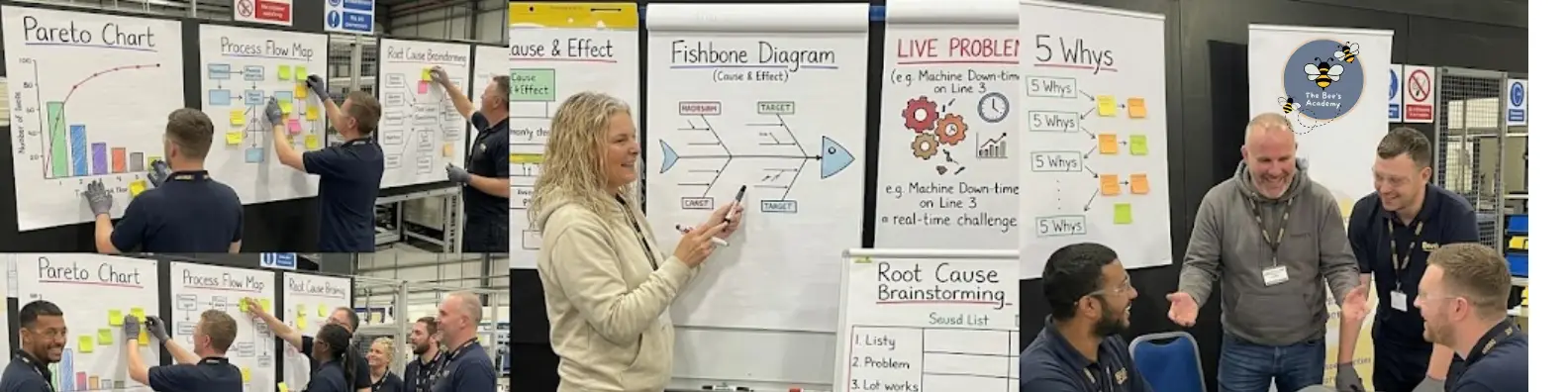
Alongside the operating model and system requirements, we worked directly with the owner and team to plan the new premises.
We measured machinery and equipment, mapped the available space and used chalk to mark out the proposed layout. It was a deliberately practical exercise.
By walking through the space and challenging the positioning of equipment before anything was installed, we could test assumptions and make changes while they were still easy to implement.
One conversation centred on a four-post vehicle ramp. The original layout positioned it inside the building for servicing company vehicles. It was useful and could save money, yet it also occupied valuable internal space that could be used for a rig supporting revenue-generating work.
The decision was made to move the ramp outside and allocate the space to the rig. That is the value of connecting layout decisions to the commercial direction of the business.
We also worked on machinery positioning, access, work-in-progress areas, inventory storage, racking and the infrastructure needed to operate the site safely.
The physical work progressed into stock counting, shelf labelling, location allocation and testing an initial inventory system. This included printing and applying more than 1,000 labels and creating a temporary inventory record to establish greater visibility over stock and its location.
The aim was to reduce unnecessary searching, duplicated purchasing, emergency orders and jobs waiting for materials that the business might already own. The new premises needed to create usable capacity, not just additional square footage.
Connecting Growth to Operational Capability
With the strategic direction and operating model established, we developed a focused marketing and commercial activity plan.
This was not about generating as many leads as possible. It was about attracting the right opportunities.
The business needed to focus on customers and projects that matched its technical strengths, available capacity and desired commercial return.
Each activity needed to pass the same strategic and commercial test: would it help create the right type of work, at the right fit, margin and capacity?
The CRM requirements were designed to support this approach, connecting commercial activity to enquiries, quotations, customers and operational capacity.
This also meant marketing could begin in a controlled way while the wider operating model was being introduced. The intention was to avoid creating demand faster than the business could manage it.
Growth should increase margin, resilience and capability, not simply turnover and workload.
A 12-Month Plan for Embedding Change
A new operating model is not successful just because it has been designed.
This project represented significant change for a small, growing team: new responsibilities, new ways of working, new technology, a new physical environment and different expectations of ownership, communication and decision-making.
Introducing everything at once risked overwhelming the team and encouraging people to return to familiar habits. We therefore developed a phased 12-month implementation plan.
At each stage, the principle is the same: set, use, coach and improve. Before moving on, the team should be able to confirm that the process is owned, being used and producing reliable information and the intended result.
The plan also identifies where the owner must reinforce new expectations and where team members need time, authority, coaching and support to develop their responsibilities.
The goal is not simply to introduce change. It is to make the new way of working become the normal way of working.
From Separate Projects to One Connected Plan
The project has established an integrated foundation connecting the business's strategic direction, future operating model, system requirements and new-site layout.
Rather than allowing individual solutions to develop independently, the business now has a coordinated design and phased implementation plan.
- Clear commercial and strategic direction linked to growth ambitions
- Future operating model defining roles, responsibilities and decision-making
- Ownership and accountability structure connecting authority, routines, capability and measures
- Process and working-standard development to support repeatable execution
- Initial system demonstration and integrated functional requirements
- Site layout informed by productivity, safety, workflow and commercial value
- Inventory locations, labelling and temporary stock records supporting improved control
- Targeted marketing and commercial activity plan aligned to available capability
- 12-month change roadmap with phased priorities and review points
The Outcomes the Model Is Designed to Deliver
- Clearer ownership and accountability: the team understands who is responsible for what, which decisions they can make and what needs escalating
- More consistent workflow: information, jobs and customer actions can move through the business with fewer unnecessary handovers and less reliance on individual memory
- Better operational and commercial visibility: stock, work in progress, customer opportunities and outstanding actions become easier to monitor and manage
- Improved capacity and cash control: the business has a stronger foundation for reducing avoidable delays, unnecessary purchasing and work sitting idle
- Reduced dependency on the owner: routine matters can be managed by the team, allowing the owner to focus more time on technical leadership, customers and future growth
- A stronger platform for scaling: additional roles, capabilities and system functionality can be introduced when workload and commercial value justify them
These are the intended benefits of the design and implementation programme. The 12-month roadmap provides the structure for embedding the changes and measuring whether those benefits are being realised.
What makes this project particularly rewarding is the opportunity to bring together every element of how the business operates.
The strategy gives direction. The operating model defines ownership and workflow. The systems support consistency and control. The site supports productivity. The people make it work.
None of those elements can deliver the full benefit in isolation. A new building without better flow simply gives inefficiency more space. A new system without clear responsibilities automates confusion. A new role without authority or capability creates another dependency. A marketing plan without operational capacity creates demand the business may struggle to deliver.
By designing these elements together, the business has a clearer route to sustainable growth, with practical implementation and team capability at the centre.
For us, this is what hands-on consultancy should look like.
Not producing a model and walking away. Not recommending technology before understanding the work. Not leaving people with a list of changes and expecting them to work everything out themselves.
It means listening, challenging assumptions, designing the right approach, getting involved on site and helping the business turn the plan into reality.
The right order matters.
Understand where the business wants to go. Design how it needs to operate. Give people the capability, ownership and authority to make it work. Build the systems and environment around that way of working. Then introduce change at a pace the business can absorb.
Growth should create a stronger business, not simply a busier owner.
Is your business growing faster than the way it runs?
If you are planning a site move, considering new technology, struggling with unclear responsibilities or finding that everything still comes back to the owner, we can help.
At Business Efficiency Experts, we work alongside engineering and manufacturing businesses to design practical operating models, improve workflow and build the capability needed to make change stick.
We are always happy to have a conversation about where your business is now, where you want it to go and what needs to change to get there.