

"We need to accelerate the critical path, enhance governance controls, deploy Lean construction principles and conduct root cause analysis on productivity variance to protect commercial performance."
- The crane is idle waiting for a lift sign-off
- A variation hasn't been approved so work pauses
- Materials are on the wrong side of the compound
- Two trades are arguing over sequencing
- A snag from last week is now blocking this week
Right now in UK construction you're dealing with planning delays, regulatory tightening under the Building Safety Act, funding uncertainty, net zero compliance demands, material price volatility, insurance increases and late payment pressure.
You cannot control most of that - it's political, economic, structural.
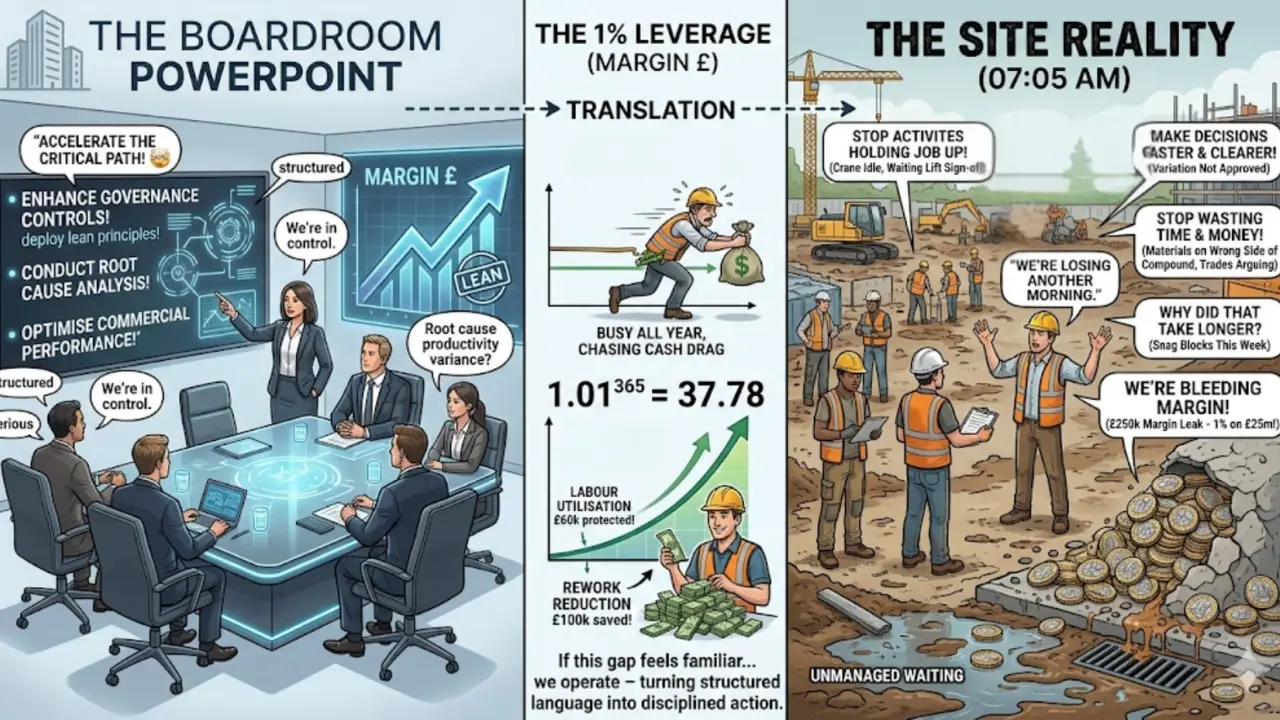
Lose 1% to delay, rework and idle time - that's £250,000 gone.
It disappears in:
-
45-minute inspection delays
-
Plant hired but unused
-
Labour stood waiting
-
Rework from drawing clashes
-
Poorly sequenced trades
-
Variations argued for days
-
Snags compounding instead of clearing
That's not macro economics. That's friction.
The frameworks aren't the enemy - but when the language stays in the boardroom and the friction stays on site, nothing improves.
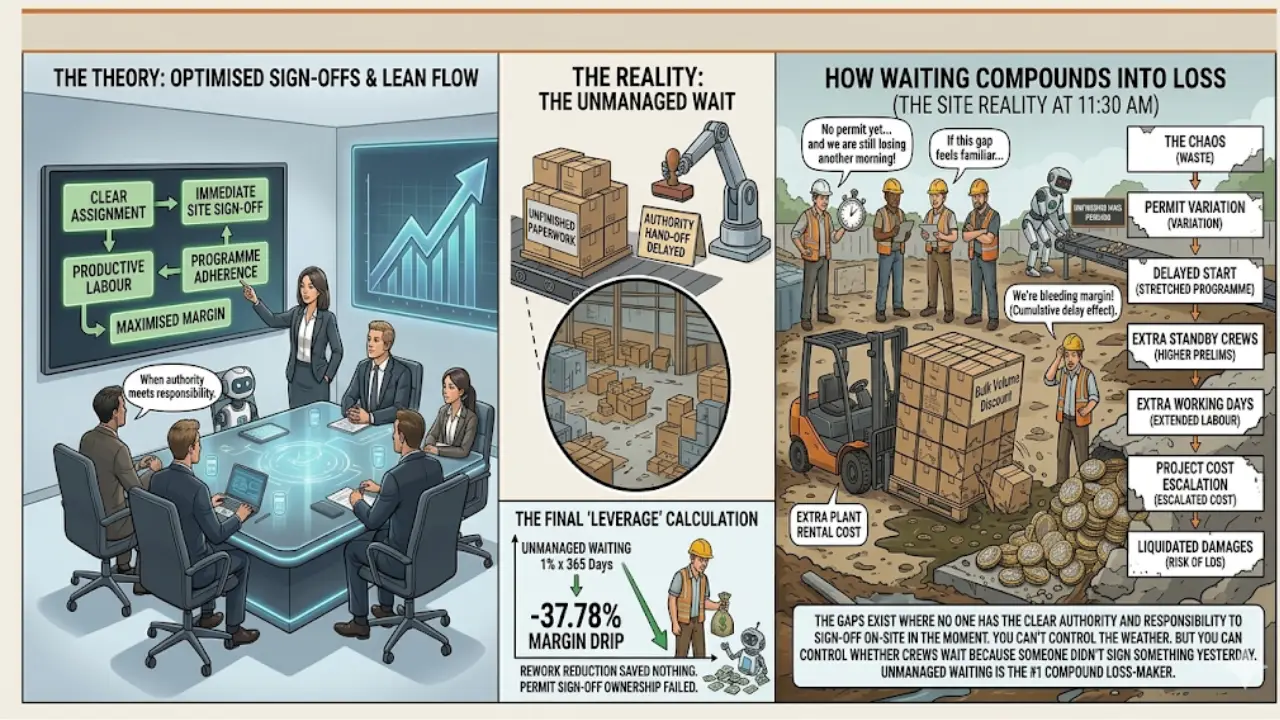
Idle labour is waste. Unapproved variations are waste. Rework is waste. Plant waiting is waste.
Waste creates variation in productivity and variation stretches the programme.
If today one predictable delay between trades is eliminated. If tomorrow inspections are booked before shift, not during. If the next day materials are staged properly before work begins.
Small changes. Every day. They soon add up:
- If labour utilisation improves by 1% on a £6m labour package £60,000 protected
- If rework reduces by 1% on a £10m build £100,000 saved
- If plant idle time drops 1% Margin strengthens immediately
Get better 1% every day over 365 days. You can't influence Westminster - but you can influence tomorrow's shift.
Yes, Six Sigma discipline matters when safety or compliance is at stake - but not every delay needs a 15-slide root cause deck.
Sometimes the issue isn't statistical. It's ownership:
- Who owns sequencing?
- Who owns sign-offs?
- Who owns the work happening in the next 24 hours?
If accountability sits in reporting lines but autonomy doesn't sit on site, waiting becomes normal - and normal waiting compounds faster than improvement.
Are we using structured improvement language to create clarity - or to describe problems while margin erodes?
Accelerating the critical path doesn't start in PowerPoint. It starts with stopping what makes the crew wait. There is enough outside your control already. So control what you can, 1% at a time, before the uncontrollable controls your margin. If this gap between improvement jargon and site reality feels familiar, that's exactly where we operate - turning structured language into disciplined action that protects time, cash and credibility.