

It might be a process that falls over at the same handoff every time. A billing error that appears in the same circumstances. A complaint that keeps coming from the same type of customer for the same underlying reason. A production step that needs intervention every third run.
It gets fixed...it comes back...it gets fixed again.
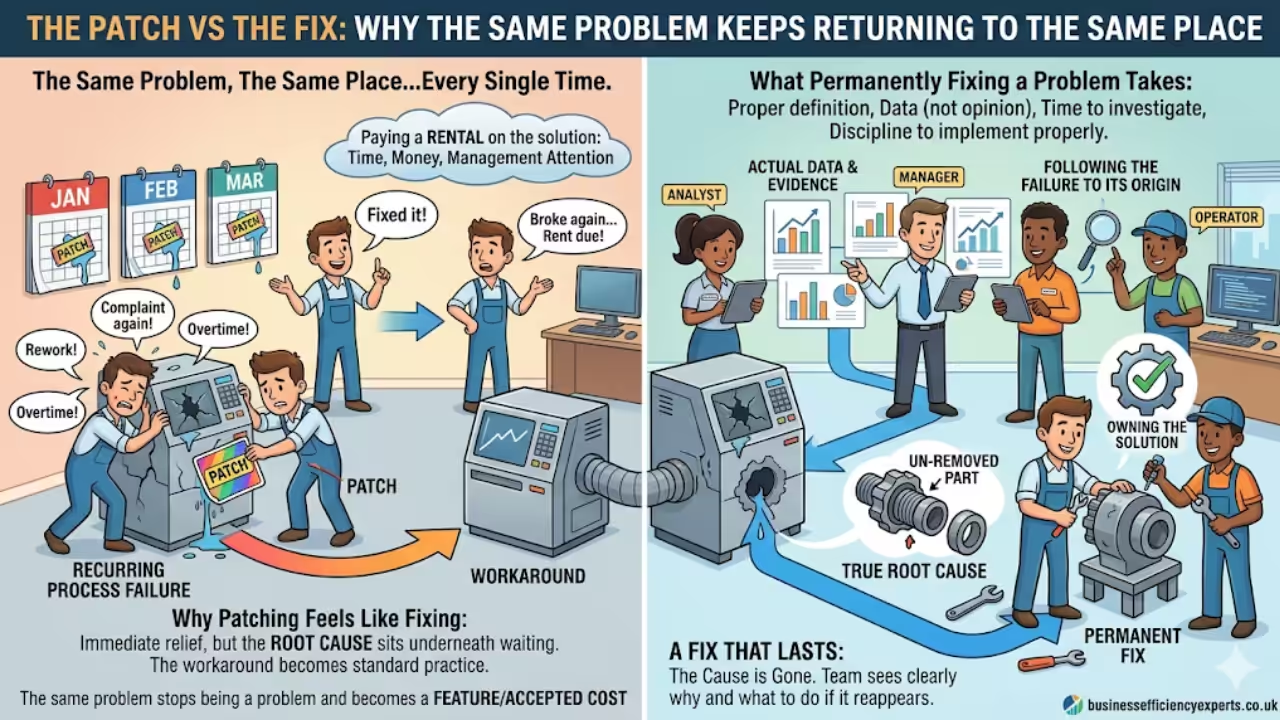
When something breaks, the natural instinct is to stop it breaking right now - patch the gap, add the check, put the right person on it. The immediate pressure is relieved, the disruption stops and the business moves on.
What doesn't happen is the investigation into why it broke in the first place. That takes time the business usually doesn't feel it has - so the patch gets applied and called a fix and the root cause sits quietly underneath it...waiting.
Three months later, the same thing breaks. In the same place, for the same reason.
"You are renting the solution rather than owning it."
- The rework hours
- The complaint handling time
- The customer credit
- The overtime to cover the delay
- The manager pulled into the same operational problem for the fourteenth time
- The team member who has stopped flagging it because nobody ever solves it
- The process now so layered with compensating checks it takes three times longer than it should
- The customer who has quietly run out of patience
None of that appears on a P&L line...all of it is real.
-
🎯Proper Problem DefinitionMost businesses move to solution before they have defined the problem accurately, which means the solution addresses a symptom rather than a cause.
-
📊Actual DataNot opinion, not a well-attended brainstorming session, not a fishbone diagram filled with the most confident voices in the room. Actual evidence of what is happening, where and under what conditions.
-
🔍Time to Follow the Failure BackTo its origin rather than to the point where it becomes visible. Those are rarely the same place.
-
✅Discipline to Implement ProperlyRather than applying another patch and calling it progress.

When we work on a process problem, we do not leave when the symptom stops. We leave when the cause is gone and when the team can see clearly why it has gone and what to do if it ever reappears.
That is the difference between a fix that lasts and a fix that lasts until next quarter.
If you have a recurring problem you are tired of managing, it is worth a conversation about what it would actually take to get rid of it.
businessefficiencyexperts.co.uk