

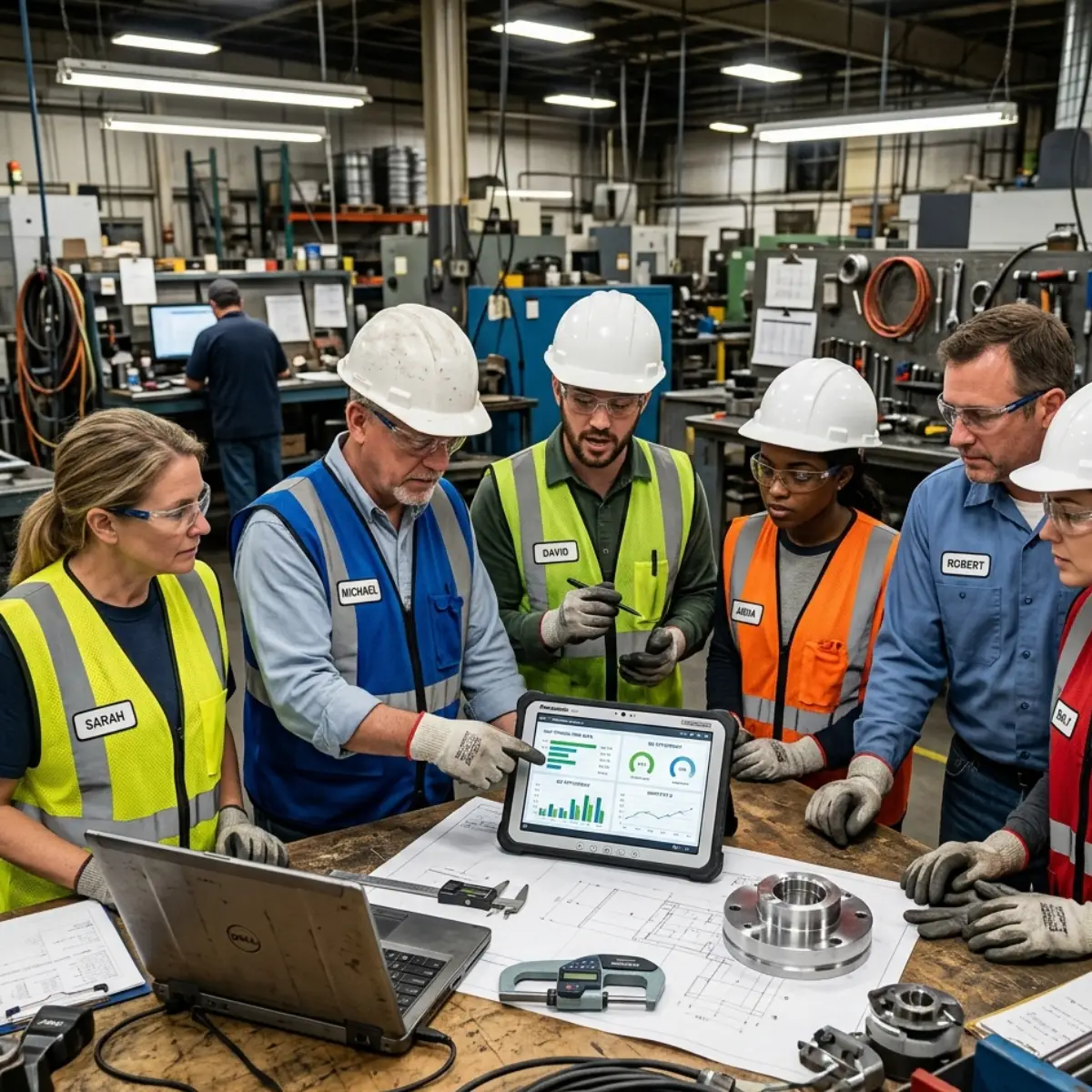
From Training to Real Operational Impact: Building Problem‑Solving Capability in a Manufacturing Team
Manufacturing teams are often expected to solve operational problems quickly, yet many improvement programmes overwhelm people with theory and statistics. The tools that matter most are the ones people will actually use – and that means keeping things practical from day one.
The Situation
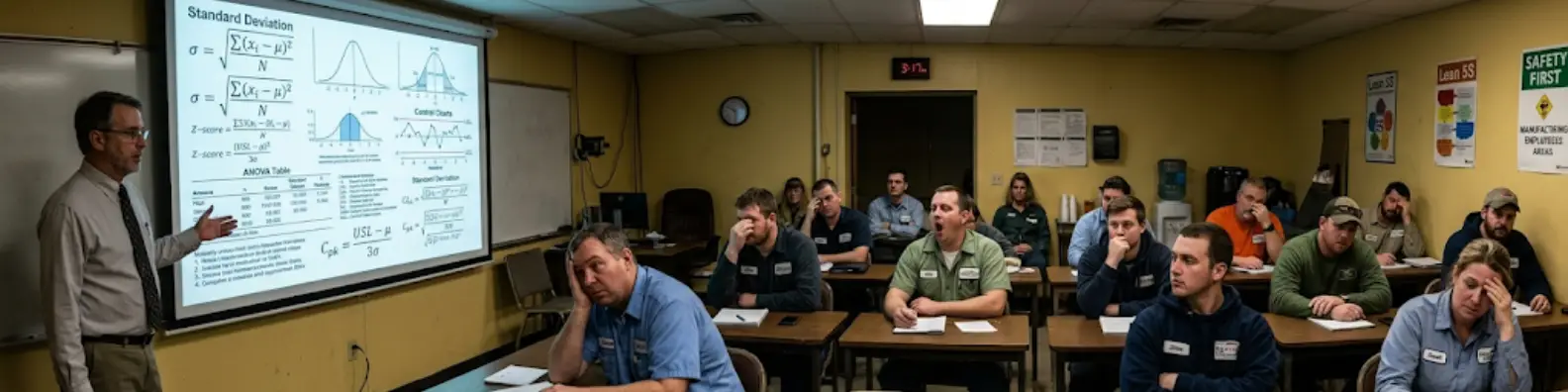
A newly appointed Operations Director recognised an opportunity to strengthen the problem-solving capability of her team. With a background as a Lean Six Sigma Yellow Belt, she understood the value of structured improvement tools – but she also knew that traditional training programmes often contained a heavy focus on statistics and theory that would be unnecessary for her team.
What the team really needed was practical support in four key areas:
The Operations Director had spoken to several training providers, but most were offering rigid White Belt or Yellow Belt programmes that followed a fixed curriculum – including tools and terminology that would add complexity without delivering real value to the team's day-to-day work.
Instead, she wanted a programme that would focus only on tools relevant to their environment, avoid unnecessary jargon and help the team apply new skills immediately.
How We Helped
Working closely with the Operations Director, we designed a bespoke operational improvement training programme tailored specifically to the team's needs. Rather than delivering a traditional Lean Six Sigma belt course, we distilled the wider toolkit down to the practical techniques that would make the biggest difference in their environment.
During the sessions we:
- Introduced core improvement and problem-solving tools in simple, relatable language
- Removed complex terminology and unnecessary statistical elements from the curriculum
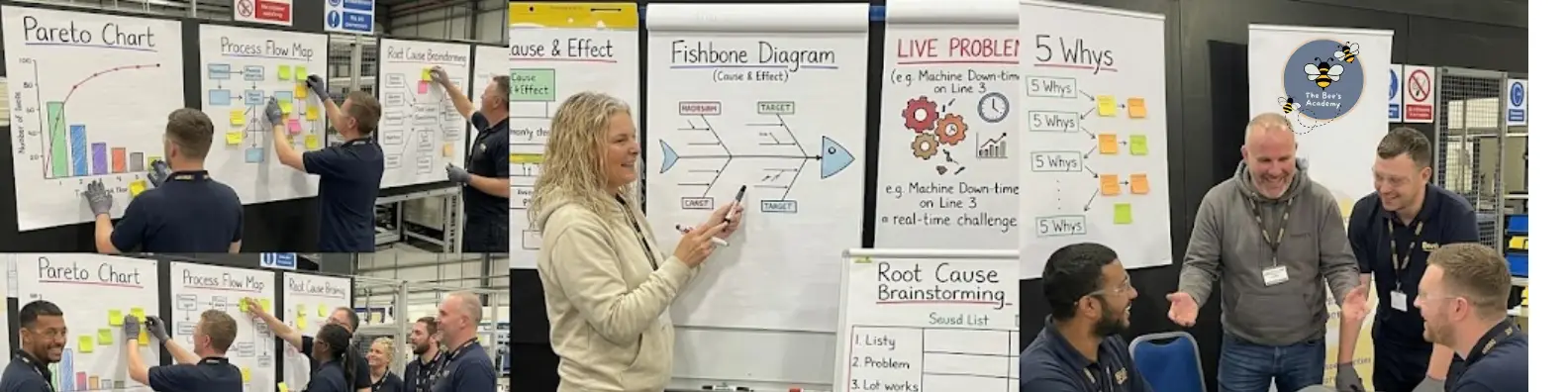
- Used videos, interactive exercises and games to bring concepts to life
- Asked participants to bring real operational challenges they were currently facing
- Worked through those challenges live using the tools introduced in the training
This turned the sessions into practical improvement workshops rather than traditional classroom training – participants left with tools they could apply the very next day, not theory they would have to translate back into their working environment.
Challenges We Worked Through
As with many operational teams, there was some initial scepticism around improvement training. Common concerns included:
By keeping the language simple, focusing on relatable examples and working through real problems during the sessions, the team quickly saw how the tools could support their work. This helped build engagement and confidence across all three cohorts.
- Previous training experiences that had felt too theoretical or removed from daily work
- Unfamiliar terminology often associated with Lean methodologies
- Concerns about whether the tools would actually be relevant to their roles
The Impact It Delivered
By the end of the programme, the team had developed a shared set of practical tools for identifying and solving operational problems. Key outcomes included:
- Bespoke curriculum designed removing all unnecessary statistics, jargon and irrelevant theory
- Real operational problems brought by participants and resolved live during training sessions
- Shared problem-solving toolkit embedded across all 30 team members in a common language
- Confidence built to tackle improvement challenges independently, without external support
- Tools applied immediately – participants left equipped to act, not informed to wait
Participants left the programme with tools they could apply immediately in their roles – not a manual to file away.
By tailoring the programme to the organisation's specific needs, the business avoided the complexity of traditional Lean training while still embedding the most valuable principles of continuous improvement.
The team now has practical tools to identify inefficiencies, solve problems collaboratively and improve how work flows across the operation.
Instead of relying on external expertise to solve operational challenges, the organisation has strengthened its internal capability to drive improvement from within – and that capability compounds over time.
The most effective training doesn't teach people everything – it teaches the right things, in the right way, so they leave equipped rather than informed. Sometimes the biggest return comes not from the tools themselves, but from the confidence to use them.
If this reflects what you're looking for in your team, always happy to have a conversation.